Once upon a time in the 1970s, 1980s and most of the 1990s, there was a Golden Age of French Gastronomy. It was an epoch during which scores of notable restaurants and their chefs regaled their clientele with copious menus, the dishes of which were laboriously fashioned from impeccable, and often luxurious, ingredients served in spacious, tasteful, comfortable dining rooms by highly-schooled and experienced servers. Portions were almost always generous, and sometimes even more, for their creators wanted you to experience them in full force and in all their glory.
For ardent diners recently setting out along gastronomic highways and byways, it’s rather a different set of circumstances. As fine dining has become more sought after and less elitist, the qualities that defined higher-echelon dining before the turn of the century have all but disappeared, replaced in large measure by regimented meals characterized by a larger variety of dishes served in small portions; cuisine based more on personal whimsy than classicism; the chef as celebrity “personage”; and contemporary technology and chemistry in the kitchen.
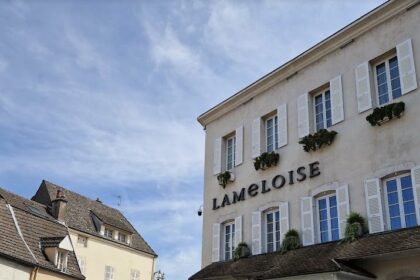
In terms of experiencing this Age d’Or de la Gastronomie, which is what we think every aspiring gastronome who already hasn’t should, there are luxury hotel restaurants to go to where you can be surrounded by opulence with formality dating back to the late 19th-century such as L’Epicure, the main dining salon in the Hotel Bristol or the Alain Ducasse Restaurant Le Louis XV in the Hotel de Paris in Monaco, where the cuisine and service hark somewhat back to this Golden Age. Yet in our estimation, no restaurant quite captures the undistilled essence of fine dining in France of the last 30 years of the 20th-century than L’Ambroisie.
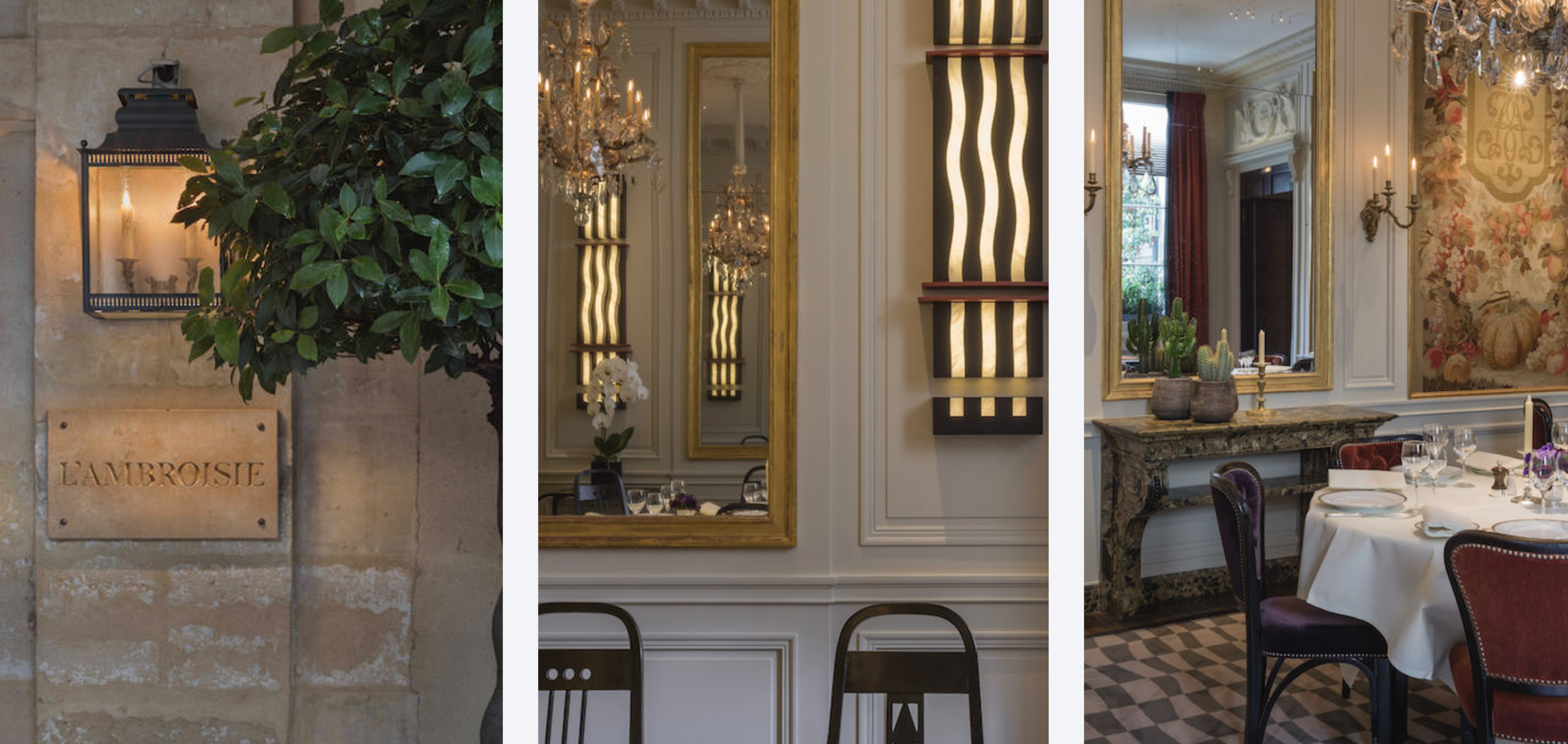
If you are a deeply caring restaurant romantic who enjoys being enveloped and swept away by every aspect of a visit, L’Ambroisie is a must. Since 1986, its address, 9, Place des Vosges, sets the scene before you set foot in the restaurant itself.
Dating from 1612, the square is one of the most magisterial and tranquil ones in Paris. In keeping with it, L’Ambroisie is furnished and decorated with 17th-century furniture, tapestries and chandeliers. It, too, is a tranquil place with tables well-spaced, making diners reflexively considerate of others.
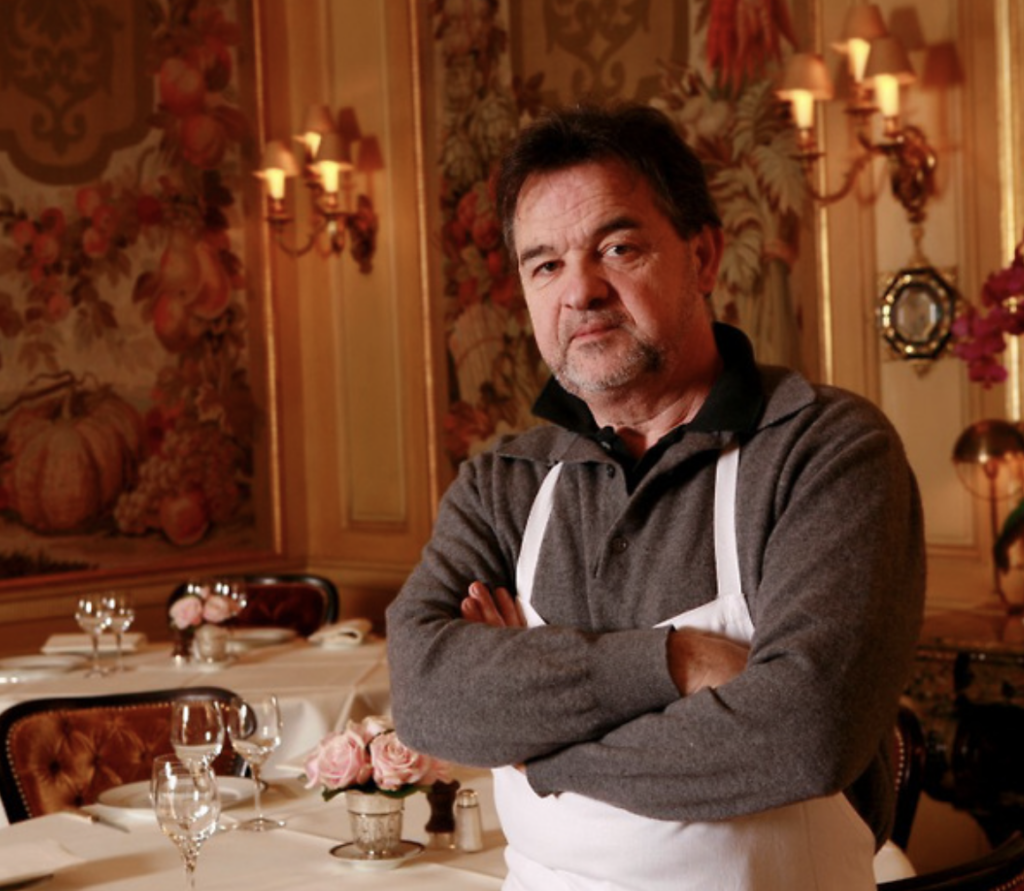
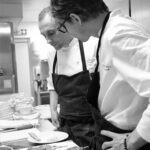
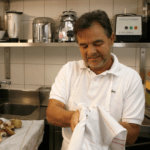
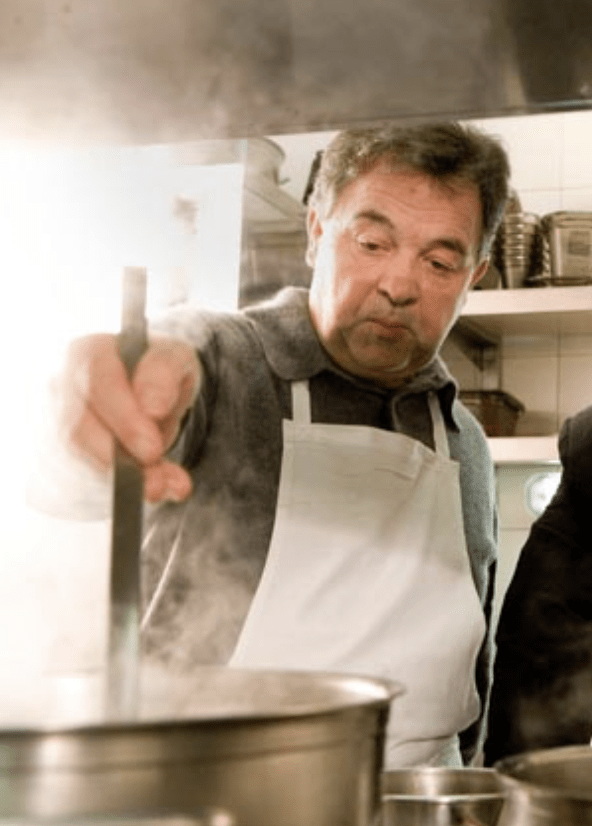
When owner-chef Bernard Pacaud moved his restaurant in 1986 to its present location, I remember how it and Joël Robuchon’s restaurant Jamin were nearly impossible to book a table. Last I checked, lunch reservations are available whenever you want with dinner fully booked only a few days in advance. It’s a melancholy symbol of how gastronomy and people’s perceptions of it have changed. In several aspects, Pacaud at age 71 is the last man standing. Unlike the restaurants mentioned above, he is in charge of the cuisine, for it is his one and only restaurant, with no one plucked from the outside to keep the restaurant going. With no other restaurant to distract him, no advertising budget, and no outside ventures, Pacaud and L’Ambroisie are fully one in the same, besides which he is still creating new dishes to go along with his classics.
In the annals of contemporary French gastronomy, Pacaud’s CV has the unique entry of having worked in the kitchen of the legendary chef Eugénie Brazier (La Mère Brazier) when barely an adolescent. His cuisine is rooted in the refined earthiness of great Lyonnais-Rhône Valley chefs such as Paul Bocuse, Alain Chapel, Jean Troisgros and Jean Vignard. Pacaud also tips his hat to Italy now and then with always an Alba white truffle dish on the fall menu, the most recent one being a refined and subtle version of a “trufalau”, a mixture of egg, cheese and truffle.
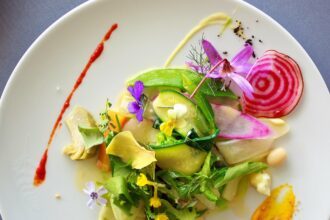
Although the harsh reality of restaurant economics has scaled back kitchen and dining room staffs and reduced the number of offerings on the menu, L’Ambroisie’s four à-la-carte-only offerings each of starters, fish dishes, meat dishes and desserts are in keeping with other Parisian restaurants in the luxury category.
To invoke the memorable phrase of Barack Obama, who had dinner at L’Ambroisie three years ago with President Hollande and Secretary of State John Kerry among others, there is the fierce urgency of now to visit the restaurant. Although Pacaud is the same age as Michel Bras and a few years older than Marc Veyrat, Guy Savoy and Pierre Gagnaire, there is no telling how much longer L’Ambroisie will remain in existence. As such it remains the purest survivor of the Golden Age. It is the object of Pacaud’s undivided attention, a bastion of authenticity of every respect.